From early-stage idea to AI-enabled beta
Partnered with an early-stage team to turn a talent-platform hypothesis into a testable AI-enabled beta—using research, facilitated strategy, experimentation, and AI-assisted building to reach a testable beta in one month, within a six-week engagement.
- Role
- Strategy & Design Lead
- Timeline
- 6 weeks · 2026
- Scope
- Venture Strategy · Product Strategy · Research · AI · Rapid Build
- Outcomes
- A testable AI-enabled beta in one month
0→1
Beta in one month
3
Stakeholder groups
Working beta
AI-enabled and ready for continued validation.
The challenge
The founders had identified an important problem and an early hypothesis for representing talent, capabilities, and opportunity beyond traditional résumés and profiles.
The concept connected candidates, employers, and institutions, but its assumptions and priorities still needed to be tested. The immediate goal was not a finished product; it was a credible direction and a working experience users could respond to.
How could we turn an early hypothesis into a product the team could test, learn from, and continue evolving?
My contribution
Built the evidence base
Combined founder and stakeholder conversations, secondary research, competitive analysis, existing evidence, assumptions mapping, and an initial user interview to identify what the team knew and what still required validation.
Created the research strategy and discussion guides so the founders could continue learning directly from users.
Shaped the venture and product direction
Facilitated working sessions to clarify the mission, vision, principles, proposition, and priorities—turning the founders’ impact ambition into a strategic foundation and testable product hypothesis.
Used AI to accelerate strategy into execution
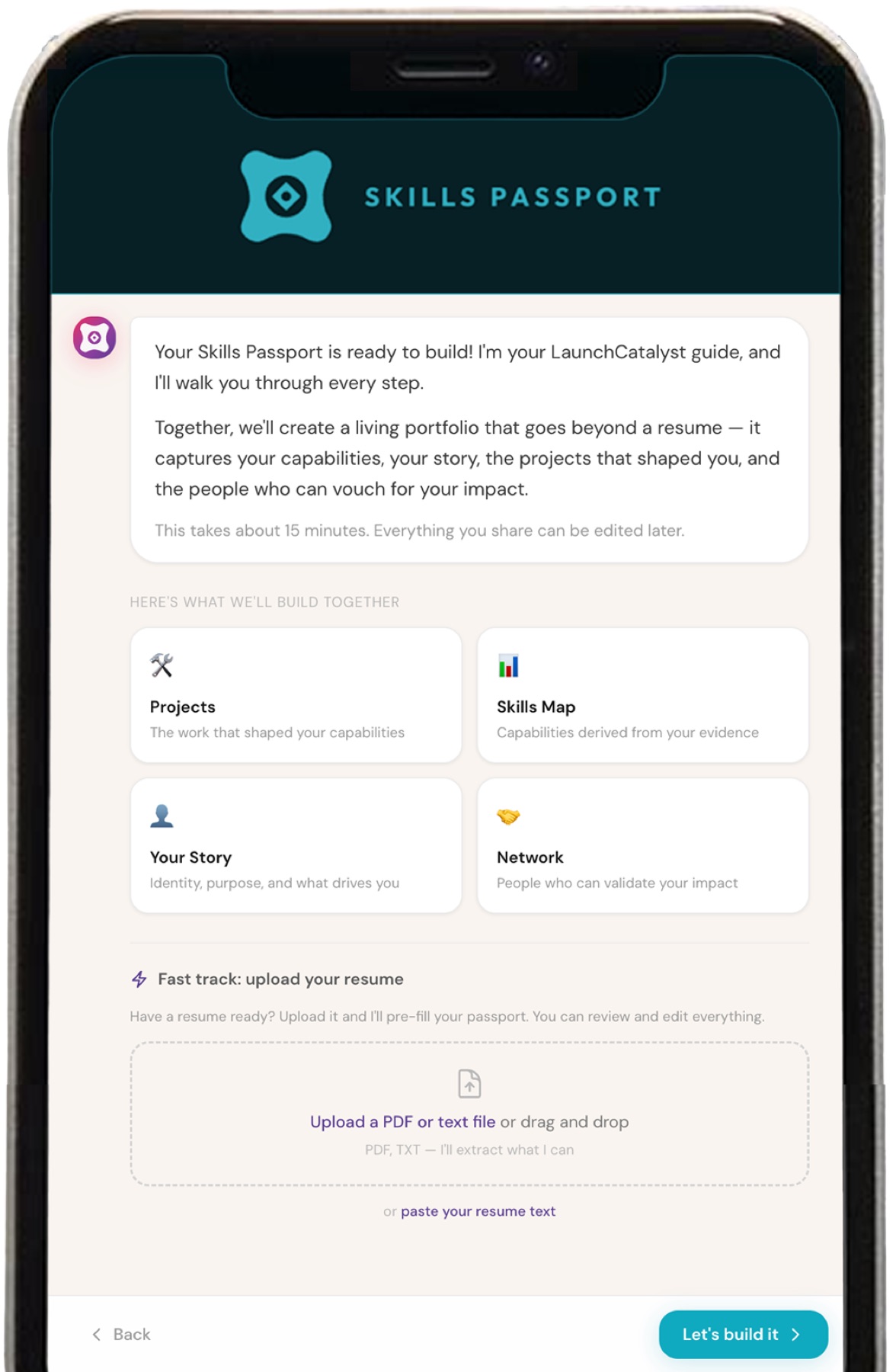
Applied AI across research synthesis, brand development, product exploration, and implementation. I then built the working beta and integrated an AI agent into the experience.
Built for continued iteration
Created the beta and validation approach so the founders could test, learn, and evolve the venture after the engagement.
What my contribution drew on
Methods & disciplines
- Venture Strategy
- Product Strategy
- Design Strategy
- Design Research
- AI Experience Strategy
- Brand Strategy
- Rapid Experimentation
Selected practices
- Founder Interviews
- Stakeholder Interviews
- Competitive Research
- Secondary Research
- Assumptions Mapping
- Evidence-Gap Analysis
- Hypothesis Development
- Hypothesis Testing
- Research Strategy
- Discussion-Guide Development
- Co-design Facilitation
- Mission & Vision Definition
- Product-Principle Definition
- Product Proposition
- Rapid Prototyping
- Concept Testing
- Brand Direction
- AI-Agent Design
- AI-assisted Development
- Beta Development
Tools & platforms
- Adobe Creative Suite
- Google Workspace
- Claude Code
- Cursor
- GitHub
- Vercel
Key decisions
Turn assumptions into testable experiences
Rather than restart discovery, I made the assumptions explicit, identified evidence gaps, and translated the hypothesis into a beta users could evaluate.
Connect purpose to product
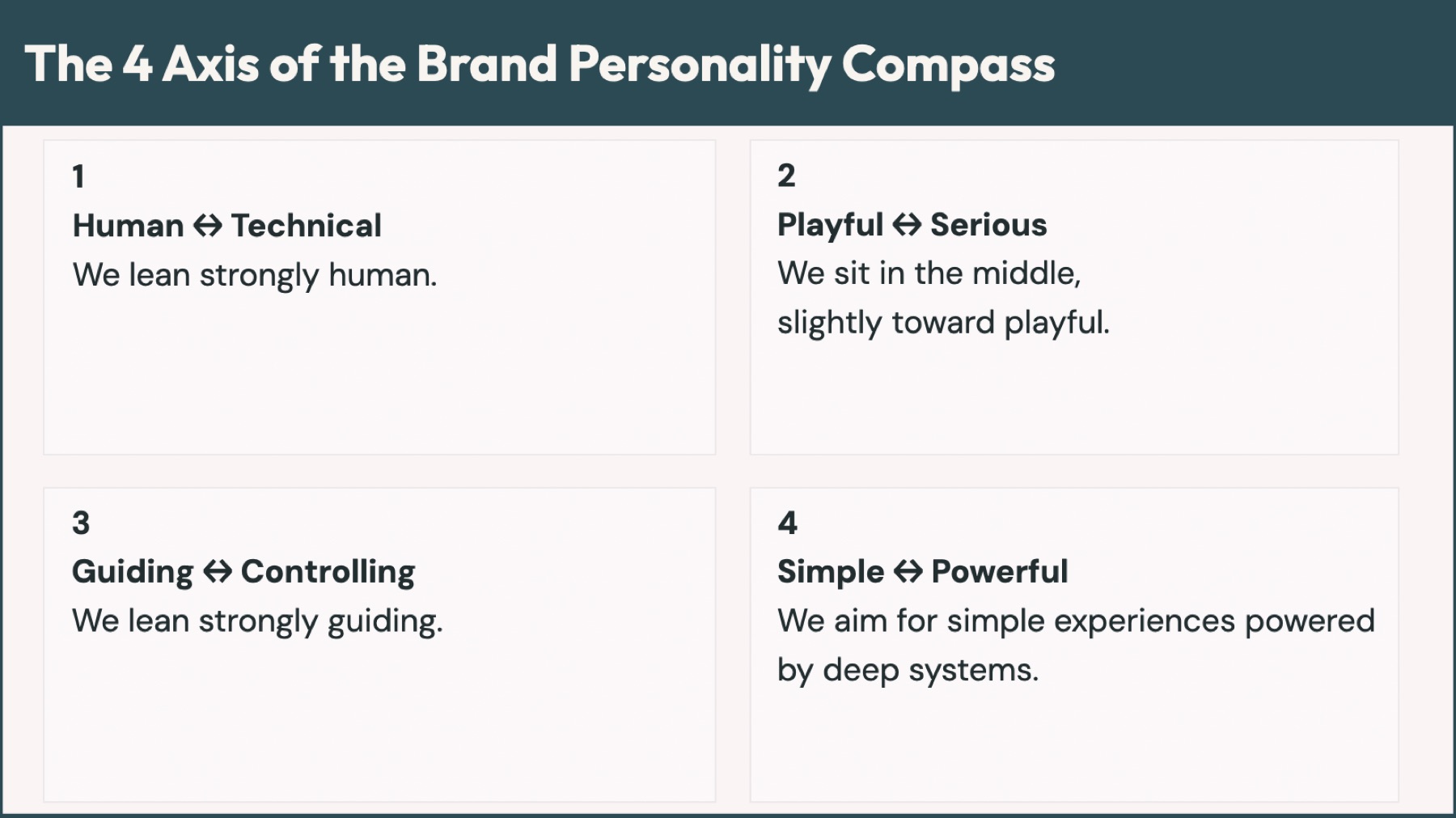
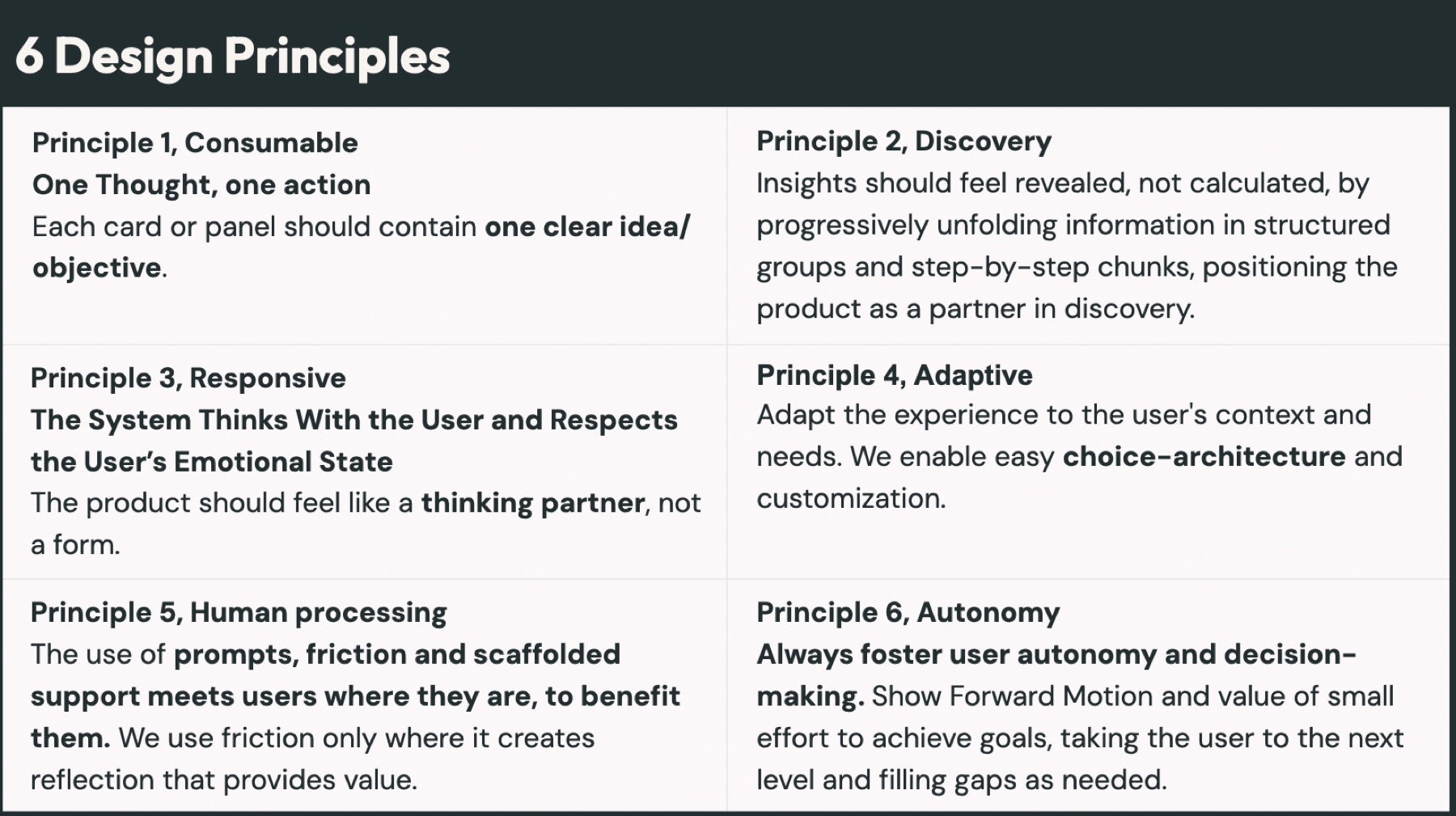
Mission, vision, principles, brand, and product direction were developed together so the team had a shared basis for deciding what to build and refine.
Use AI to compress the path from thinking to making
AI enabled me to move between research, strategy, brand, prototyping, and implementation—turning strategic decisions into a working beta within one month.
What changed
In one month, Launch Catalyst moved from an early hypothesis to a working AI-enabled beta. By the end of the six-week engagement, the founders also had a research approach they could continue using.
1 month
Idea → working beta
3
Stakeholder groups
A product and research framework connecting candidates, employers, and institutions.
Research
Capability transferred
A research strategy and discussion guides for continued user validation.
Iteration
Continued after handoff
The beta and research approach became the foundation for subsequent versions and testing.