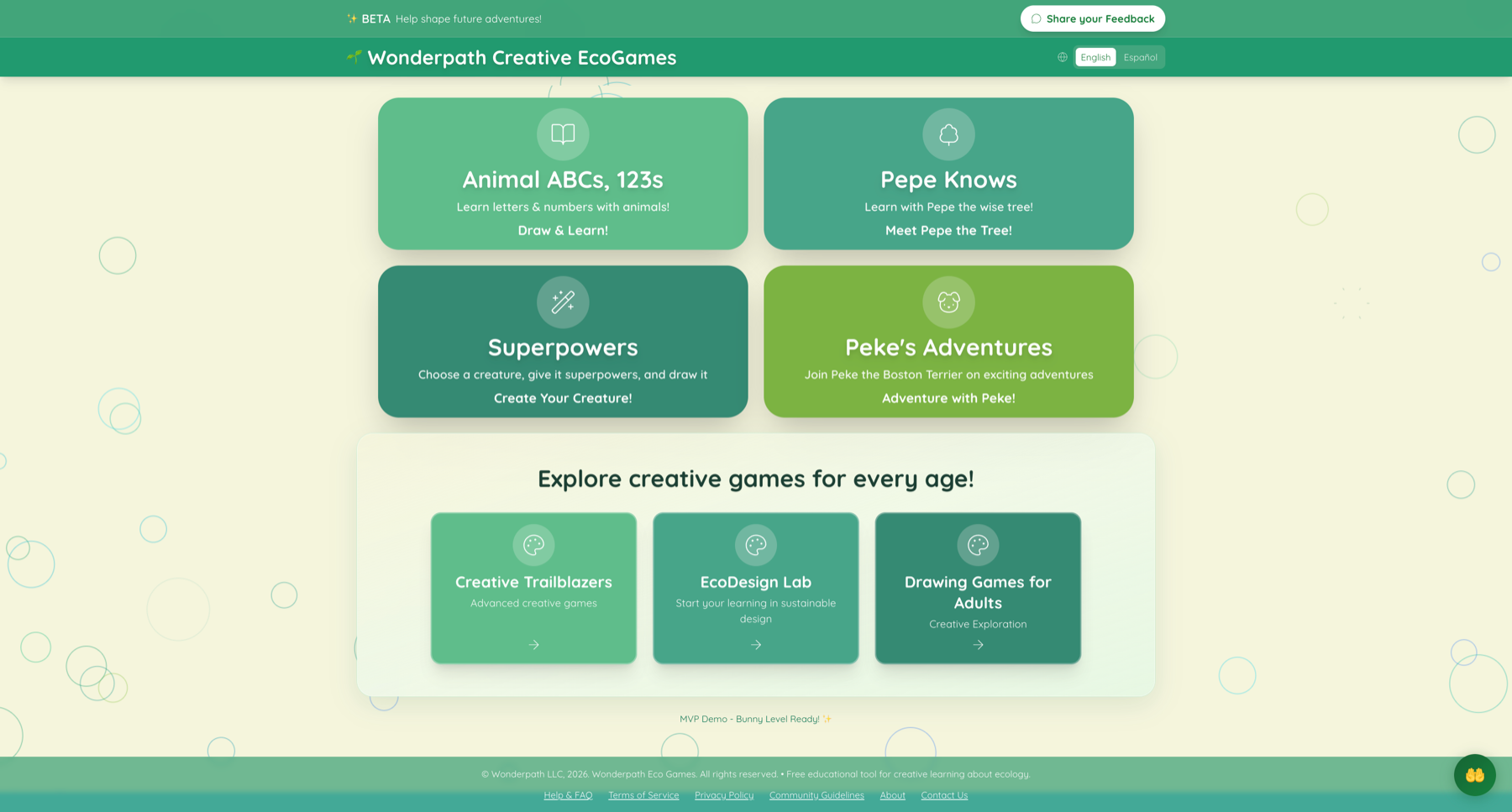
Ecolittle
Playful early-learning experiences connecting language, numbers, animals, and the natural world.
Founded and independently built a bilingual learning platform exploring how AI and creative technology could support active, ecological learning—from concept to 12 interactive experiences, public launch, and early testing.
12
Interactive experiences
0→1
Independently built
Launched
And tested with real users
Digital learning often keeps people focused on the screen. I wanted to explore whether technology could do the opposite—encouraging observation, making, experimentation, and curiosity about the world around us.
Could digital technology become a bridge into active learning rather than a destination in itself?
Built the platform independently
Took Wonderpath from concept through product strategy, learning experiences, interaction and visual design, content, code, AI integration, testing, deployment, and launch.
Used AI selectively
Created AI-supported guidance for caregivers and an AI design helper for teens using text and vision to coach drawings and ideas while teaching design thinking, sustainable design, and permaculture.
Used AI to expand what I could build
Used AI-assisted development across concept exploration, prototyping, coding, content, and implementation, enabling me to independently create experiences that would otherwise have required a larger product and engineering team.
Tested with real users
Combined product analytics with small play-testing sessions involving children and caregivers to observe how people used the experiences and identify opportunities for refinement.
Methods & disciplines
Playful early-learning experiences connecting language, numbers, animals, and the natural world.
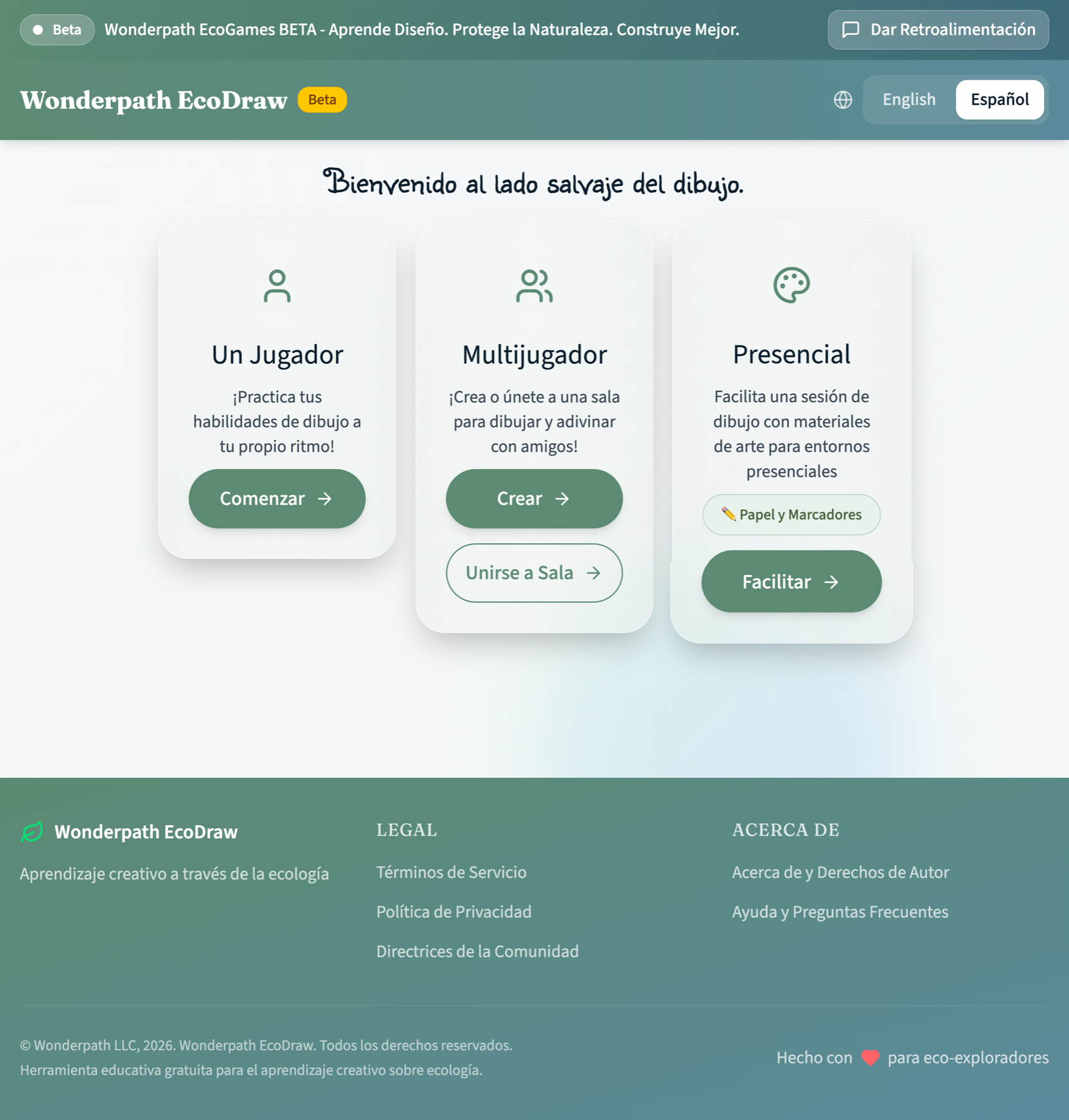
Visual experiences that use drawing and observation to explore ecological relationships.
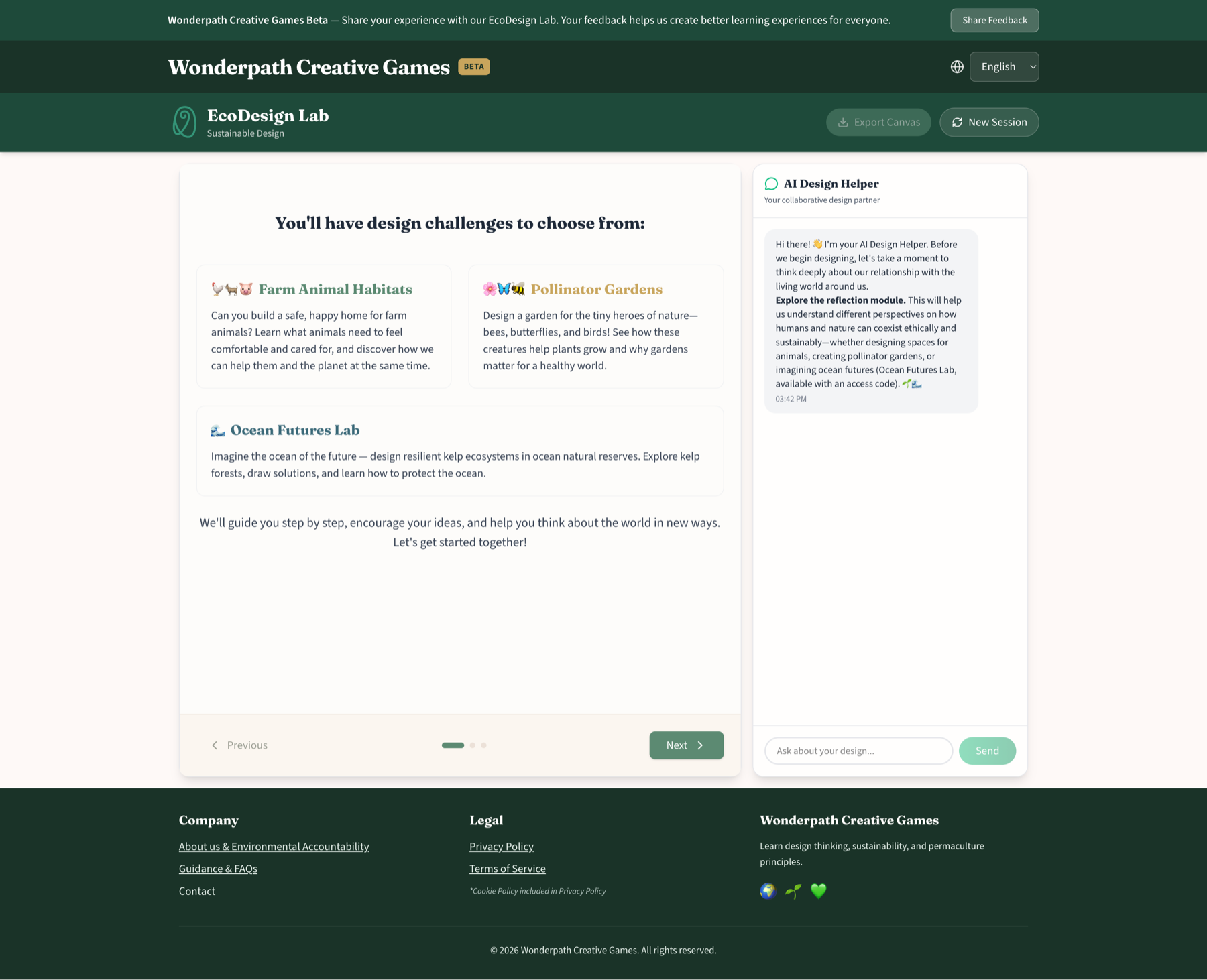
AI-supported challenges where learners investigate environmental problems and design possible responses.
Technology should direct attention outward
Designed experiences that prompt observation, drawing, making, movement, experimentation, and engagement with the physical world beyond the screen.
Use the lightest technology that does the job
Used preloaded content and dynamic code where those approaches were sufficient, reserving AI for interactions where responsiveness or interpretation meaningfully improved the learning experience. This also reduced unnecessary token use, computational dependency, and cost.
Launch to learn
Put the platform into the world early enough to generate evidence through real use rather than continuing to develop solely from assumptions.
Wonderpath grew from a personal experiment into a functioning bilingual platform with 12 interactive experiences spanning early learning, ecological design, drawing, and AI-supported exploration.
12
Interactive experiences
Designed, built, and launched as the initial Wonderpath platform.
1,000+
Users at launch
Early usage of the free public platform at launch.
Play testing
With children and caregivers
Combined small-sample observation with analytics to identify strengths and opportunities for refinement.
0→1
Independently
Built without a dedicated product or engineering team.
The project also became a practical environment for developing my ability to work directly with AI—moving beyond designing AI experiences to using it as part of how I research, prototype, build, and learn.